
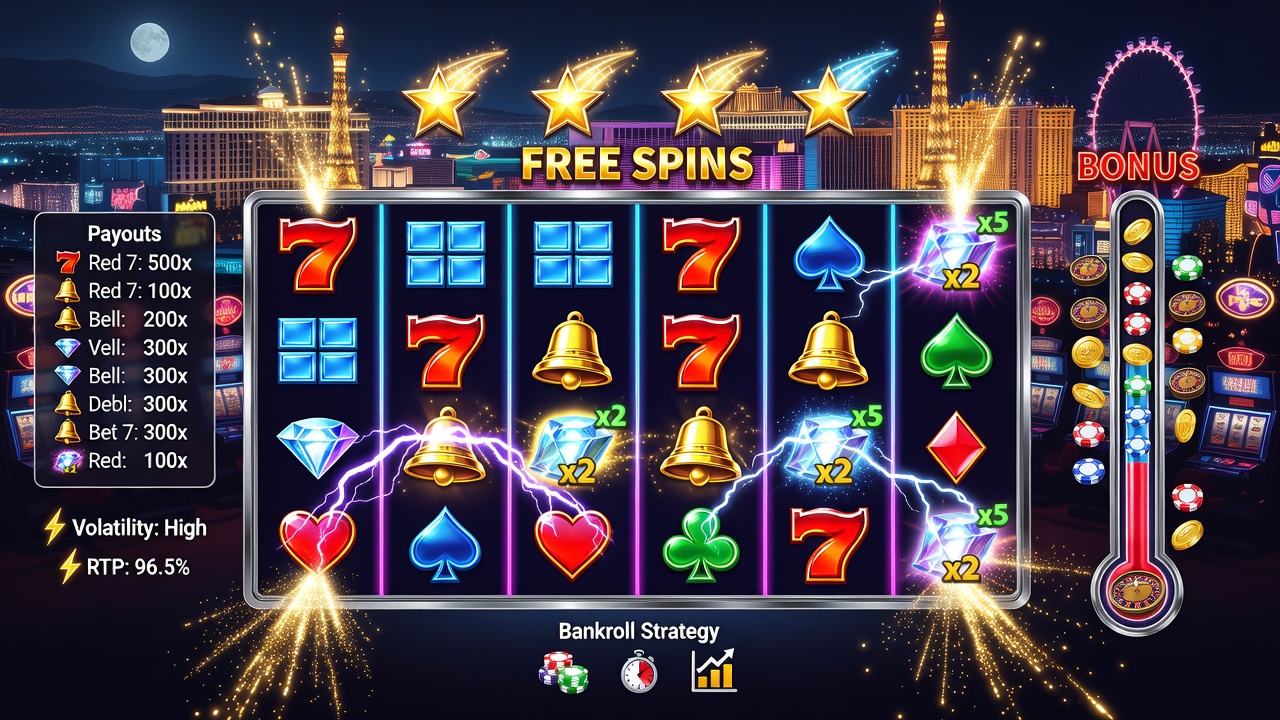
Six reels, up to seven rows, and a reel configuration that shifts on every single spin - that's the mechanical reality behind a slot mechanic that can generate well over 100,000 ways to win in a single spin. Most players never notice the exact number because the visual chaos of cascading symbols and shifting grids distracts from the math underneath. But that math is precisely why this format has become one of the most talked-about engines in modern slot design, and why a Vegas-themed take on it deserves a closer look than the average casino floor game gets.
What makes the format worth studying isn't the glitz. It's the volatility curve, the payout mechanics, and the way bonus rounds interact with an already unpredictable base game. Before committing real money, it helps to understand exactly how the reel mechanic behaves, what the return-to-player figure actually tells you, and how a checked reference such as vegas megaways rtp compares against similar titles in the same category. That comparison matters more than most players assume, because two games with near-identical themes can behave completely differently once volatility and hit frequency enter the picture. This guide breaks down the payout structure, the risk profile, the bonus mechanics, and the practical strategy adjustments that separate an informed session from a guessing game.
What Is a Vegas Megaways Slot?
The Origins of the Megaways Mechanic
The Megaways engine was originally developed as a licensed mechanic that any studio could build into its own titles, provided it paid for the rights. The core idea is simple: instead of a fixed number of symbols per reel, each reel displays a random number of symbols on every spin, typically between two and seven. That randomness multiplies across six reels, producing a number of ways to win that changes constantly. A Vegas Megaways slot takes that engine and wraps it in classic casino iconography - sevens, bells, bars, neon signage, sometimes card suits - creating a hybrid between old-school slot nostalgia and a modern, high-variance structure.
How the Vegas Theme Fits the Mechanic
Vegas-style symbols work well with Megaways because the traditional slot aesthetic already implies simplicity, and the engine adds complexity underneath that simple surface. Players get the visual comfort of a familiar theme while the underlying math delivers a fundamentally different experience from a classic three-reel machine. This contrast is part of the appeal: the game looks approachable but plays with considerably more unpredictability than its appearance suggests.
Reel Structure and Ways-to-Win Explained
Because each reel can display a different number of symbols, the total number of ways to win recalculates every spin. A six-reel setup with a maximum of seven symbols per reel can theoretically reach ways-to-win counts in the hundreds of thousands. This is the defining trait of a vegas megaways slot - not the theme, not the graphics, but the constantly shifting grid that makes every spin structurally unique.
- Reels typically range from six columns with 2-7 symbols each
- Ways-to-win recalculate on every single spin, not just during bonus rounds
- Cascading or tumbling wins are common, removing winning symbols and dropping new ones into place
Vegas Megaways Payout Structure Explained
Base Game Payouts and Paytable Logic
Payouts in a Megaways title are calculated per way rather than per fixed line, which changes how players should read the paytable. A symbol combination that looks modest on paper can multiply significantly once the number of ways to win climbs into the tens of thousands. The vegas megaways payout for premium symbols - usually the sevens, diamonds, or branded Vegas icons - tends to sit higher than standard card-suit symbols, following the same tiered structure found in most modern video slots.
Return to Player (RTP) and What It Really Means
RTP is a theoretical long-term figure, not a promise for any individual session. A game listed at 96% will, over millions of spins, return that percentage of wagered money to players collectively. It says nothing about what happens in the next ten spins. Checking the specific RTP figure before playing is one of the few genuinely useful habits a player can adopt, since even small percentage differences compound significantly over extended play.
Maximum Win Potential
Most Vegas Megaways titles advertise a maximum win expressed as a multiple of the stake - commonly somewhere between 2,000x and 20,000x, depending on the specific title and its volatility design. That ceiling matters less than how often the game gets anywhere close to it, which is where volatility comes back into the conversation.
Understanding Vegas Megaways Volatility
Low vs High Volatility: What Changes for the Player
Volatility describes how wins are distributed over time. A low-volatility game pays smaller amounts more frequently, keeping the balance relatively stable. A high-volatility game does the opposite: long dry stretches punctuated by occasional large hits. Vegas megaways volatility generally leans toward the higher end of the spectrum, a direct consequence of the ways-to-win mechanic combined with multiplier features that can inflate a single win dramatically.
Why Megaways Games Tend Toward High Volatility
The mathematics behind the shifting reel structure naturally produces variance. When the number of ways to win can swing from a few hundred to over a hundred thousand between spins, the payout distribution becomes inherently uneven. Add cascading wins and escalating multipliers, and the variance compounds further. This is by design - the format is built to create dramatic swings rather than steady, predictable returns.
How Volatility Affects Bankroll Planning
A player who understands volatility adjusts bankroll expectations accordingly. High-volatility play requires a larger buffer to survive the dry spells that precede bigger hits. Treating a Vegas Megaways title like a low-volatility classic slot - expecting frequent small wins - leads to disappointment and often to chasing losses, which is precisely the pattern responsible bankroll management is meant to prevent.
Vegas Megaways Bonus Features Breakdown
Free Spins and Retriggers
Free spin rounds are the centerpiece of most Megaways bonus structures. Landing the required scatter symbols - usually three or more - triggers a set number of free spins, often with an added twist such as increasing multipliers, an expanding reel set, or locked wild symbols that persist across the round. Retriggers extend the bonus further, and in many titles this is where the bulk of the maximum win potential actually gets realized.
Multipliers and Cascading Wins
Cascading mechanics remove winning symbols after a payout and drop new ones into the vacated spaces, allowing a single spin to generate consecutive wins. Many vegas megaways bonus features stack a multiplier on top of this cascade, increasing with each consecutive win within the same spin sequence. This combination is largely responsible for the headline-grabbing win multiples these games can produce.
Special Symbols: Wilds, Scatters, and Bonus Icons
Wild symbols substitute for standard paying symbols and sometimes carry their own multiplier value. Scatters trigger bonus rounds regardless of their position on the reels. Some titles add a dedicated bonus icon - a collectible symbol that fills a meter and unlocks a secondary feature once enough have landed within a set number of spins. Each of these elements adds a layer of unpredictability that reinforces the game's overall volatility profile.
- Scatter-triggered free spins with escalating multipliers
- Cascading wins that can chain multiple payouts from a single spin
- Wild symbols with attached multiplier values
- Collectible bonus symbols that unlock secondary features
Vegas Megaways Strategy: Playing Smart
Bankroll Management for High-Variance Play
Given the volatility profile, a sound vegas megaways strategy starts with session budgeting rather than bet sizing. Setting aside a bankroll that can absorb 100-200 spins at a chosen stake gives the game room to reach its bonus features without forcing an early exit during a cold stretch. Splitting that bankroll into smaller session budgets, rather than risking it all in one sitting, also helps maintain discipline.
Bet Sizing and Session Length
Smaller, consistent bets extend playtime and increase the statistical opportunity to hit a bonus round, which is where most of the meaningful payouts originate. Larger bets accelerate both potential gains and potential losses without meaningfully improving the odds of triggering a feature. Matching bet size to the volatility of the specific title, rather than to a fixed personal habit, produces more consistent long-term results.
Reading Paytables and RTP Before You Play
Every reputable Vegas Megaways title publishes its paytable and RTP figure, usually accessible from an in-game information menu. Reviewing this before wagering reveals which symbols carry the most weight, how the bonus round triggers, and what the theoretical return looks like over time. Skipping this step means playing blind, which undermines any other strategic effort.
Common Mistakes Players Make
The most frequent error is treating a high-volatility Megaways title like a steady, low-risk game - expecting frequent wins and increasing bets after a losing streak to "catch up." Another common mistake is ignoring the specific RTP and volatility rating of the title in favor of theme or branding alone. Both habits erode bankroll faster than the game's natural variance would on its own.
Frequently Asked Questions
Is a Vegas Megaways slot better than a standard slot for beginners?
Not necessarily. The shifting reel structure and higher volatility make outcomes less predictable, which can be confusing for someone unfamiliar with variance-based games. Beginners often do better starting with a lower-volatility title before moving to a Megaways format once they understand bankroll pacing.
How many ways to win can a Vegas Megaways slot actually have?
It depends on the specific reel configuration, but many titles cap out somewhere between 15,625 and over 200,000 ways to win, depending on how many symbols each of the six reels can display. The exact maximum is usually listed in the game's information screen.
Does higher volatility mean a lower RTP?
No, the two are separate metrics. RTP measures long-term return percentage, while volatility measures how that return is distributed over time. A game can have high volatility and a competitive RTP simultaneously - the wins are just less frequent and larger when they occur.
What's the best way to trigger the bonus round more consistently?
There's no guaranteed method, since scatter triggers are random by design. Extending playtime through smaller, consistent bets improves the statistical opportunity for scatters to land, but it doesn't change the underlying probability per spin.
Should I chase losses in a high-volatility Megaways game?
No. Increasing bets to recover losses ignores the fact that each spin is independent of the last. A fixed session budget and a willingness to walk away after reaching a loss limit protect against the kind of compounding losses that variance-heavy games can produce.
How do I compare RTP between different Vegas Megaways titles?
Check the published RTP figure for each title, usually found in the paytable or information menu, and compare it against similar games in the same volatility bracket. A small percentage difference matters more over extended play than it appears to in a single session.