
Monopoly Roll-Em Dice Rules: Game Rules Overview, Rolling Odds Strategy & Winning Tips
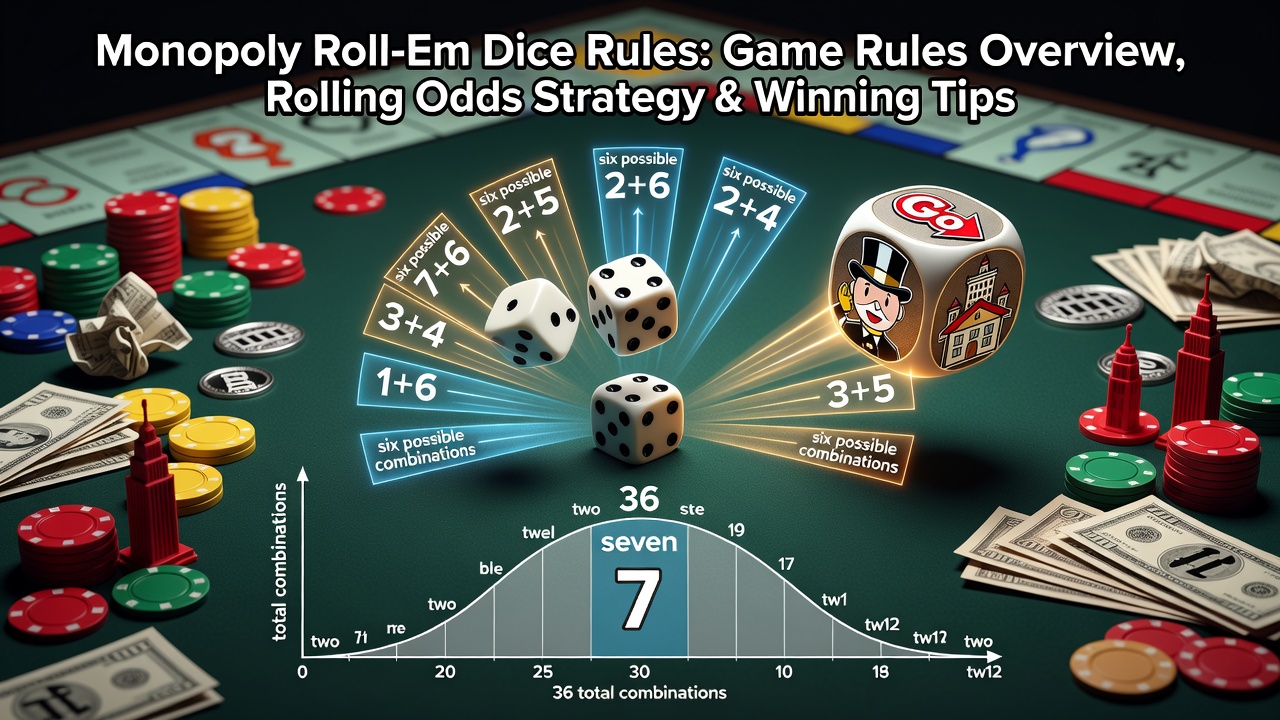
Two dice, seven possible sums that dominate every board game built around them, and one number - seven - that shows up nearly six times more often than a two or a twelve. That single mathematical fact quietly shapes every version of Monopoly that trades property deeds for pure dice-rolling action, including the fast-paced variant known as Monopoly Roll-Em. Most players jump into a session focused on tokens, bonus rounds, or flashy graphics, completely overlooking the probability engine running underneath every roll.
That oversight costs them. Understanding monopoly roll em rules changes how you approach betting decisions, timing, and risk management from the very first turn. This isn't a game where luck alone separates winners from spectators - it's a game where recognizing dice patterns and payout structures gives attentive players a measurable edge. For anyone looking to study the official framework before playing, the detailed monopoly roll em rules page lays out the mechanics clearly. Once you grasp how the numbers behave, the game stops feeling random and starts feeling readable.
What follows is a complete breakdown: how the game actually works, why certain rolls matter more than others, and which strategic habits separate casual players from consistent winners. No filler, no guesswork - just the mechanics and the math.
What Is Monopoly Roll-Em? A Quick Introduction
Monopoly Roll-Em takes the core identity of the classic board game - property names, tokens, the familiar branding - and strips away the board itself. What remains is a dice-driven format where outcomes depend on combinations rolled rather than where a token lands on a physical track. It's built for speed: rounds resolve quickly, and the appeal lies in repeated, rapid dice outcomes rather than long strategic property negotiations.
Origins and Connection to Classic Monopoly
The format borrows its visual identity and thematic elements directly from traditional Monopoly - the top hat, the railroad icon, the recognizable color palette - but the gameplay mechanic is closer to craps or sic bo than to the original board game. It exists because publishers recognized that Monopoly's brand recognition could support a purely chance-based dice product without needing the full board, cards, or property trading system.
How It Differs From Traditional Monopoly Gameplay
Traditional Monopoly rewards negotiation, patience, and long-term property strategy across an hour or more. Monopoly Roll-Em compresses everything into single dice events. There's no buying, no rent collection, no jail mechanic in the traditional sense - instead, players wager on specific roll outcomes, and results are determined instantly. Speed and immediacy are the defining features, which is why understanding the underlying dice rules matters more here than in the standard board game.
Game Rules Overview: How Monopoly Roll-Em Works
A clear game rules overview is the foundation for playing well. Before wagering or predicting outcomes, players need to understand the sequence of a round, what's being staked, and what triggers a payout.
Setting Up the Game
Each round begins with players placing their bets on specific outcomes - a particular number, a range of numbers, or a special combination tied to Monopoly-themed bonus symbols. Once bets are locked in, the dice are rolled, either physically or through a randomized digital equivalent depending on the platform. There's no board setup, no starting cash distribution in the traditional sense; the "setup" is simply choosing where to place value before the roll happens.
Turn Structure and Player Roles
Unlike classic Monopoly, where turns rotate and each player controls their own token, Roll-Em typically operates on a shared-roll structure. One roll determines the outcome for everyone at the table simultaneously, and each player's result depends entirely on which bet they placed, not on turn order. This removes the "waiting for your turn" friction found in the board game and replaces it with continuous, rapid-fire rounds.
Special Symbols and Bonus Rounds
Monopoly-branded dice games often introduce bonus triggers tied to specific symbols - Mr. Monopoly's top hat, houses, hotels, or "Go" markers - that appear alongside standard pips on custom dice faces. Landing these symbols can unlock multiplier rounds or bonus payouts separate from the standard number-based bets. These bonus mechanics are where the branding earns its keep, giving the dice format a layer of thematic excitement beyond plain probability.
Understanding the Dice Rules in Detail
Dice rules form the backbone of the entire experience, and they deserve close attention because small misunderstandings here lead to poor betting decisions later.
Number of Dice Used and Their Function
Most Roll-Em formats use two standard six-sided dice, sometimes supplemented with a third specialty die carrying Monopoly-specific symbols instead of numbers. The two numbered dice generate the classic 2-through-12 range familiar from craps and similar games, while the specialty die introduces the bonus-symbol layer discussed earlier.
Valid vs. Invalid Rolls
Not every roll counts. Dice that land off the table, lean against a wall, or fail to settle flat on both faces are typically voided and re-rolled. This rule exists in nearly every dice-based casino and tabletop game because a tilted or unstable die doesn't produce a fair, random result. Knowing this prevents confusion when a roll gets discarded and repeated.
Scoring Combinations and Payout Triggers
Payouts are tied to specific combinations: hitting an exact sum, rolling doubles, or matching a bonus symbol on the specialty die. Some combinations pay modestly because they occur frequently - a seven, for instance - while rare combinations like snake eyes or triple matches on bonus dice pay substantially more because they happen far less often. This inverse relationship between frequency and payout size is standard across nearly all dice games and is central to how the odds structure balances itself.
- Standard number bets: tied to the sum of the two numbered dice
- Doubles bets: both dice showing matching numbers
- Bonus symbol bets: tied to the specialty Monopoly-themed die
- Combination bets: requiring both a specific sum and a bonus symbol simultaneously
Rolling Odds Strategy: Making Sense of the Numbers
This is where players separate themselves from pure gamblers. A rolling odds strategy isn't about predicting individual rolls - that's mathematically impossible with fair dice - it's about understanding which bets carry better long-term value.
Probability Distribution of Two-Dice Rolls
With two six-sided dice, there are 36 possible combinations. Seven is the most probable sum because six different combinations produce it (1-6, 2-5, 3-4, and their reverses). Extreme sums like two and twelve have only one combination each, making them the rarest outcomes. This bell-curve distribution is the single most important fact in any dice rules strategy, and it applies identically inside Monopoly Roll-Em as it does in craps.
High-Probability vs. High-Payout Bets
Betting on seven wins more often but typically pays less because the house accounts for its higher frequency. Betting on two or twelve pays far more when it hits, but it hits rarely. Neither approach is objectively "correct" - the decision depends on whether a player prioritizes steady, smaller wins or occasional, larger ones. Recognizing this trade-off is the core of any sound rolling odds strategy.
Common Misconceptions About "Hot" and "Cold" Dice
Dice have no memory. A die that rolled three sevens in a row has exactly the same odds of rolling a seven on the next throw as it did on the first. The belief in "hot" or "cold" dice is a well-documented cognitive bias, not a mathematical reality. Players who chase streaks or avoid numbers because they "just hit" are making decisions based on illusion rather than probability.
Winning Tips and Practical Strategies
Beyond understanding the math, a few practical habits consistently improve outcomes over extended play.
Bankroll Management Basics
Set a fixed amount you're willing to risk before starting, and stop when you reach that limit - whether you're up or down. Because Roll-Em rounds move quickly, it's easy to place far more bets per hour than in slower games, which means losses can accumulate faster than expected without disciplined limits.
Balancing Frequent Small Bets with Rare Big Payouts
A common approach splits wagers between a safer, high-frequency bet (like seven or a mid-range sum) and a smaller stake on a rare, high-payout combination. This hedges against long dry stretches while still leaving room for a substantial win if a rare combination lands.
Reading Bonus Symbol Patterns
While individual bonus symbol rolls are random, tracking how bonus rounds are structured over a session can help players time larger wagers around bonus-heavy phases if the specific game version includes escalating bonus frequency mechanics. Not every Roll-Em variant includes this feature, so checking the specific ruleset in use matters before adjusting strategy around it.
Avoiding Emotional Betting Decisions
Chasing losses by increasing bet size after a bad streak is one of the fastest ways to drain a bankroll. Sticking to a predetermined betting pattern, regardless of recent results, keeps decisions grounded in probability rather than frustration.
Frequently Asked Questions
What's the difference between Monopoly Roll-Em and standard Monopoly?
Standard Monopoly is a property-trading board game played over an extended session with negotiation and strategy. Monopoly Roll-Em is a fast-paced dice game that borrows the branding and theme but resolves outcomes through dice rolls and wagers, with no board, property purchases, or turn rotation involved.
Can I improve my odds by betting on specific numbers consistently?
Betting consistently on a high-frequency number like seven improves the rate at which you win individual rounds, but it doesn't change the underlying house edge built into the payout structure. Consistency helps with predictable, smaller returns rather than guaranteeing overall profit.
What happens if a die lands off the table or doesn't settle flat?
That roll is voided under standard dice rules and the dice are re-rolled. This ensures the result reflects a fair, uncontrolled outcome rather than one influenced by an unstable landing surface.
Is there a "best" combination to bet on in Roll-Em?
There's no single best bet - it depends on your risk tolerance. Frequent sums like six, seven, and eight offer steadier, smaller wins, while extreme sums like two or twelve offer rare but larger payouts. A balanced rolling odds strategy typically mixes both types.
Do bonus symbols follow different odds than the numbered dice?
Yes. Bonus symbols usually appear on a separate specialty die with its own distribution, independent of the sum produced by the two numbered dice. Because the symbol die often has fewer matching faces, bonus triggers tend to be rarer and carry higher payouts accordingly.
Is Monopoly Roll-Em based on skill or luck?
It's fundamentally a luck-based game since dice outcomes are random and can't be controlled. Skill enters through bankroll management, bet selection, and understanding probability distributions - factors that influence long-term results even though they can't change any individual roll.