
Lightning Roulette Strategy and Rules: How It Works, Best Bets, and a Complete Betting Guide
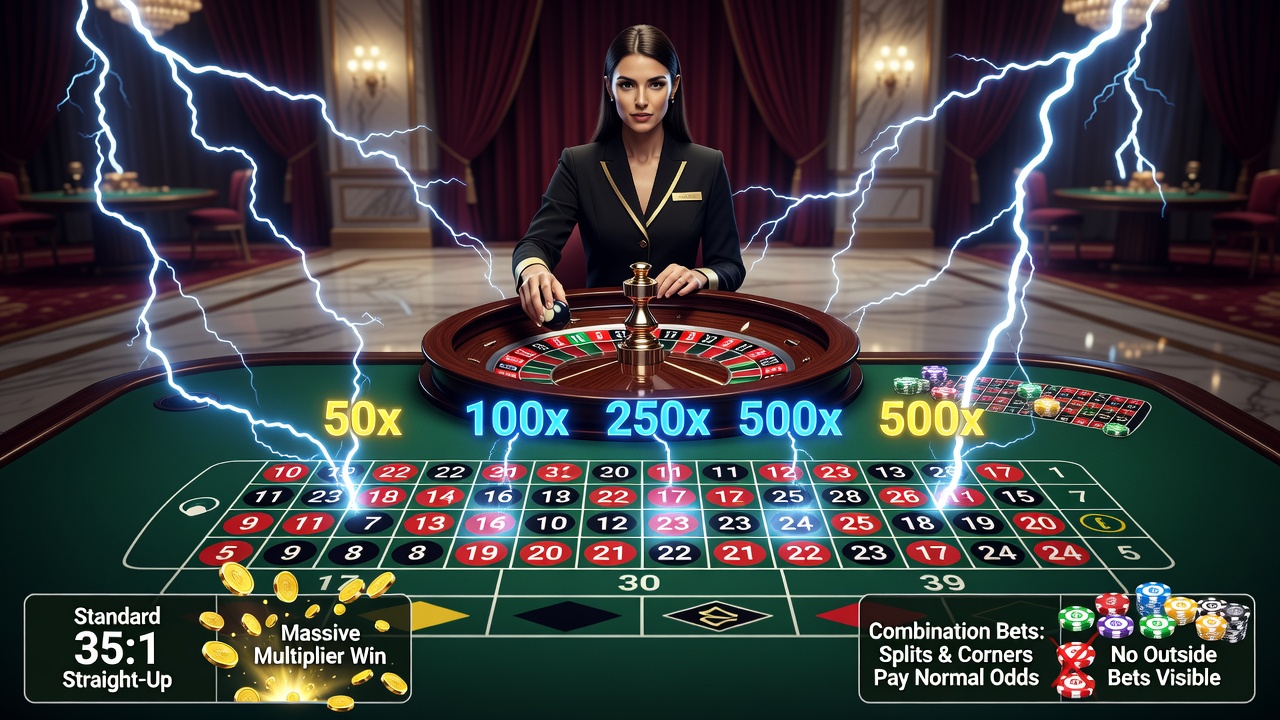
A single number in Lightning Roulette can pay 500 to 1, more than ten times what a standard straight-up bet returns anywhere else at the table. That multiplier is not a marketing gimmick tacked onto an old game - it is the entire reason this variant exists, and it changes how a disciplined player should think about risk, bankroll, and bet selection from the first spin.
Most newcomers approach Lightning Roulette the way they approach European roulette: pick a number, place a chip, hope. That approach ignores the mechanic that makes this game genuinely different. Before placing a single wager, it helps to understand the sequence of events that separates this format from every other roulette variant on the floor. If you have never tried it, reviewing how to play lightning roulette before committing real money will save you from costly misunderstandings about payout structure. Once the mechanics are clear, the strategic layer becomes much easier to grasp.
This guide breaks down the rules, explains the random-number-generator logic behind the "lightning numbers," and walks through the betting patterns that experienced players actually rely on. It also addresses the mathematical trade-offs nobody mentions in promotional material - because a game built around occasional massive payouts behaves very differently from one built around steady, modest returns.
What Is Lightning Roulette and Why It Stands Out
Lightning Roulette is a live-dealer variant built on a standard European roulette wheel - single zero, 37 pockets - but layered with a digital multiplier system that strikes between one and five numbers each round. Those struck numbers, called lightning numbers, receive a random multiplier ranging from 50x to 500x. If a player has a straight-up bet on a number that gets struck and then wins, the payout is not the usual 35 to 1. It's the assigned multiplier instead.
Origins and Game Format
Developed for live casino studios, Lightning Roulette uses a real wheel spun by a live dealer, combined with a random number generator that determines which numbers get struck before each spin. This hybrid format - physical wheel plus digital overlay - is what separates it from both traditional live roulette and fully automated RNG roulette games.
Why It Attracts High-Volatility Players
The appeal is straightforward: the ceiling on a single bet is dramatically higher than anywhere else in roulette. A player betting the table minimum on a struck number can walk away with winnings that dwarf what the same wager would return on a red/black or column bet. That asymmetry is exactly what draws players who prioritize upside over consistency.
How It Differs From Standard European Roulette
- Standard straight-up payout is 35 to 1; Lightning Roulette's struck-number payout ranges from 50 to 1 up to 500 to 1.
- Outside bets (red/black, odd/even, columns) are not available in Lightning Roulette - only inside bets qualify.
- A short delay is added before each spin while the RNG determines the lightning numbers and their multipliers.
Lightning Roulette Rules Explained Step by Step
Understanding lightning roulette rules is not complicated, but the details matter, especially around which bets qualify for the multiplier and which don't. Missing this distinction is the most common mistake new players make.
Table Layout and Betting Limits
The betting layout mirrors a standard European roulette table with all the usual inside bet options: straight-up, split, street, corner, line, and the six-line bet. Minimum and maximum limits vary by operator, but the structure of the bets themselves stays consistent with classic roulette.
The Lightning Round: How Multipliers Get Assigned
Before the dealer spins the wheel, a random number generator selects between one and five numbers on the betting grid and assigns each one a multiplier. This happens during a brief "lightning round" animation. Only straight-up bets are eligible for these multipliers - split, corner, street, and other combination bets pay their standard, unmultiplied odds even if one of the numbers within that bet happens to be struck.
Payout Structure for Struck and Unstruck Numbers
If the ball lands on a struck number and a player has a straight-up bet there, the payout equals the assigned multiplier. If the ball lands on a number that was never struck, standard payout rules apply across the board - 35 to 1 for straight-up, 17 to 1 for split, and so on down the line.
House Edge and RTP Considerations
The presence of massive multipliers doesn't eliminate the house edge - it redistributes it. Lightning Roulette typically carries a slightly higher house edge on straight-up bets than standard European roulette, because the extra-large payouts are balanced against the fact that lightning numbers are struck relatively rarely.
How Lightning Roulette Works Behind the Scenes
Understanding how lightning roulette works requires separating the physical wheel mechanics from the digital multiplier engine running alongside it.
The Role of the RNG in Selecting Lightning Numbers
The RNG operates independently of the physical wheel spin. It selects the struck numbers and multipliers before the dealer releases the ball, meaning the outcome of the wheel spin has zero influence over which numbers get struck. The two systems are deliberately decoupled to preserve fairness.
Live Dealer Integration
A human dealer manages the physical spin, just as in any live European roulette game. The digital overlay - the lightning numbers, the multiplier graphics, the electric visual effects - is rendered on top of the live video feed but has no bearing on the dealer's actions or the ball's physical trajectory.
Why Outside Bets Are Excluded
Outside bets are excluded entirely from Lightning Roulette. This is a deliberate design choice: the entire value proposition of the game rests on high-multiplier straight-up bets, and allowing low-volatility outside bets would dilute the game's identity without adding meaningful strategic depth.
Best Lightning Roulette Bets for Different Playing Styles
Choosing the best lightning roulette bets depends heavily on whether a player is optimizing for frequent, modest wins or infrequent, massive ones. There is no universally "correct" bet - only bets that match a given bankroll and risk tolerance.
Straight-Up Bets: Maximum Multiplier Exposure
Placing chips directly on individual numbers is the only way to access the 500x ceiling. The trade-off is variance: a 37-pocket wheel means any single number hits roughly once every 37 spins on average, and being struck by lightning on top of that is an additional layer of rarity.
Spreading Bets Across Multiple Numbers
Some players spread smaller stakes across five, six, or more individual numbers to increase the odds that at least one lands on a struck pocket. This doesn't change the underlying math of the wheel, but it does raise the probability of intersecting with a lightning number during any given round.
Combination Bets for Steadier Returns
Split, corner, and street bets pay standard odds regardless of lightning strikes, making them a lower-variance option for players who want more frequent, smaller wins rather than chasing a rare multiplier. These bets behave exactly as they would in classic European roulette.
Balancing Coverage and Payout Potential
- Concentrated straight-up bets: highest potential payout, lowest win frequency.
- Spread straight-up bets: moderate payout potential, improved odds of intersecting a struck number.
- Combination bets: consistent, standard payouts unaffected by the lightning mechanic.
Lightning Roulette Strategy: Building a Smarter Betting Approach
A sound lightning roulette strategy starts with accepting that no betting pattern changes the wheel's fixed probabilities. What a strategy can do is manage exposure, bankroll, and expectations in a way that aligns with the game's unusual payout curve.
Bankroll Management for High-Variance Play
Because the biggest wins in this game are rare and large, bankroll management matters more here than in flat-payout roulette variants. Setting a fixed session budget and dividing it into small, consistent unit bets prevents a single losing streak from wiping out the capital needed to eventually catch a struck number.
The Flat Betting Approach
Flat betting - wagering the same amount on the same numbers every round - is the most disciplined way to play Lightning Roulette. It avoids the trap of escalating bets after losses, which can drain a bankroll quickly given how infrequently straight-up numbers hit.
Progressive Betting: Risks and Realities
Progressive systems, such as increasing bet size after a loss, are sometimes suggested for roulette generally. In Lightning Roulette, these systems are riskier than usual because the payout structure already carries higher volatility. Combining two sources of variance - a progressive system and a multiplier-driven game - compounds risk rather than balancing it.
Setting Realistic Win and Loss Limits
Because the appeal of this game is the outsized payout, it's easy to keep playing "just one more spin" while chasing a multiplier. Predetermined stop-loss and stop-win thresholds, set before the session starts, are the single most effective discipline tool available.
Complete Lightning Roulette Betting Guide for New and Experienced Players
A practical lightning roulette betting guide has to account for both the mechanical rules and the psychological pull of chasing large multipliers.
Starting Small: Testing the Waters
New players benefit from starting with minimum bets across a small number of straight-up positions to observe how frequently lightning numbers appear and how the multiplier system behaves across dozens of rounds before increasing stake size.
Reading the Table Before Committing Larger Stakes
Because lightning numbers are assigned randomly each round with no memory of previous outcomes, there is no pattern to "read" from prior spins. What players can observe instead is their own comfort with the pace and volatility of the game before scaling up bet size.
Adjusting Strategy Based on Session Goals
A player aiming for a short, high-upside session might concentrate stakes on fewer numbers. A player aiming for a longer session with steadier entertainment value might favor combination bets. Matching bet selection to session goals - rather than switching styles mid-session - produces more predictable outcomes.
Frequently Asked Questions
Can outside bets like red/black be placed in Lightning Roulette?
No. Lightning Roulette only permits inside bets - straight-up, split, street, corner, line, and six-line. Outside bets are removed entirely from the table layout, which is a defining feature of this variant compared to standard European roulette.
How often do lightning numbers actually get struck?
Between one and five numbers are struck each round out of 37 possible pockets, and the selection is fully random via RNG. Because the struck numbers change every round with no carryover, there's no way to predict or influence which numbers will be selected next.
Do split or corner bets pay the multiplier if one of their numbers is struck?
No. Only straight-up bets qualify for the lightning multiplier. Combination bets like splits, corners, and streets always pay their standard fixed odds, regardless of whether one of the numbers included in that bet happens to be struck.
Is Lightning Roulette better or worse odds than regular roulette?
The house edge on Lightning Roulette's straight-up bets is generally slightly higher than in standard European roulette, because the massive multipliers are offset by the rarity of struck numbers actually landing. It's a trade-off between higher variance and marginally lower long-term return.
What's the maximum multiplier a player can win?
The top multiplier available on a struck number is 500 to 1, applied only to straight-up bets. Multipliers assigned by the RNG can range anywhere from 50x up to that 500x ceiling, with the exact value randomized each round.
Is there a betting system that guarantees profit in Lightning Roulette?
No betting system changes the fixed probabilities of a roulette wheel or the RNG-driven multiplier assignment. Systems like flat betting or progressive betting can manage bankroll risk and pacing, but none alter the underlying house edge or guarantee long-term profit.